
The guest’s half of a bowl of tea
A red glint in a centuries-old Kyoto tea bowl invites a closer look at the guest’s role in the Japanese way of tea.
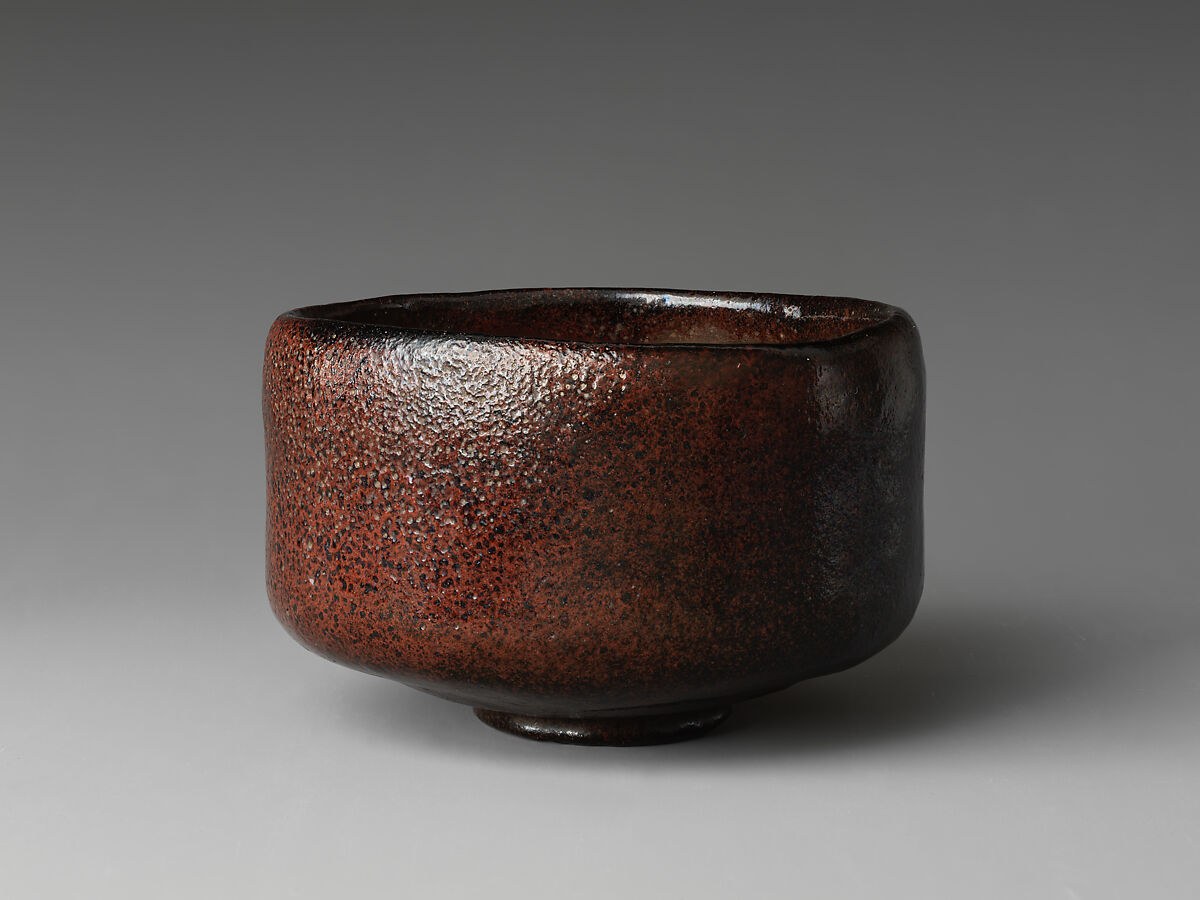
Look at the left side of Raku Ichinyū’s tea bowl Setting Sun. A rusty red glimmers through the dark glaze. The Kyoto potter made the bowl in the late seventeenth century. It measures a little over four inches across. On a screen you can enlarge it until it fills your whole field of vision. In a tea room you could hold it in your hands.
Chado, the Japanese way of tea, asks something of the person who receives the bowl. The Urasenke school describes a host preparing matcha for a particular guest and a guest answering that care with gratitude. The same people could meet again tomorrow, with the same bowl, and this afternoon together would still happen only once.
It is easy to picture attention from the host’s side. Someone chose the bowl, heated the water and made room for you. What does attention feel like from the other chair? Sometimes it is the willingness to sit there a little longer when your first impulse is to gather the cups and make yourself useful.
At home, let the next person who offers you something to drink choose the cup. If an old mug catches your eye, ask where it came from. Perhaps it was a gift. Perhaps it was the last clean one on the shelf. Stay for the answer, even if the water has already boiled.